
400-867-1999
Packaging manufacturers face increasing demand for customized boxes, protective inserts, retail displays, and short-run packaging. Traditional die cutting is efficient for mass production, but frequent design changes can increase tooling costs and preparation time.
A CNC cutting machine for cardboard and packaging materials provides a flexible alternative. Using digital cutting files, precision knife tools, and automatic nesting software, manufacturers can produce complex packaging shapes without dedicated cutting dies.
Modern digital flatbed cutters can also combine cutting, creasing, and optional camera registration, making them suitable for packaging prototypes, customized orders, and small-batch production.
A CNC cardboard cutting machine is a computer-controlled system that cuts packaging materials according to digital patterns.
Many machines use oscillating knife technology to mechanically separate cardboard and other compatible materials.
A typical workflow includes:
CAD Design → Automatic Nesting → Material Loading → Cutting and Creasing → Folding → Inspection
Depending on the configuration, the machine may include:
Oscillating knife cutting head
Creasing wheel
Drag knife
V-cutting tool
Automatic nesting software
Vacuum material holding
Optional CCD camera registration
Unlike traditional die cutting, CNC cutting allows manufacturers to modify packaging designs through software without producing new cutting dies for ordinary design changes.
Digital cutting machines can process various packaging materials when equipped with suitable tools.
| Material | Typical Application |
|---|---|
| Corrugated cardboard | Shipping boxes and e-commerce packaging |
| Folding carton board | Cosmetic and retail packaging |
| Kraft paperboard | Product boxes and protective packaging |
| Honeycomb cardboard | Heavy-duty packaging |
| Paper-faced foam board | Displays and promotional packaging |
| EVA foam | Protective packaging inserts |
| EPE foam | Electronics cushioning |
| Flexible PU foam | Customized protective components |
| Adhesive films | Labels and packaging graphics |
Material compatibility depends on thickness, density, structure, and cutting-tool configuration.
Thick or rigid materials may require specialized cutting equipment.
Traditional die cutting requires physical tooling for different packaging structures.
CNC cutting processes digital patterns directly, making it particularly useful for prototypes, customized packaging, and short production runs.
Manufacturers can adjust box dimensions, openings, locking tabs, and internal structures through CAD software.
This reduces the preparation required for design revisions.
CNC motion control enables cutting of suitable curves, internal openings, and irregular contours.
Consistent cutting helps improve folding and assembly when material handling is properly controlled.
Automatic nesting software arranges packaging patterns within available sheets.
Optimized layouts can improve material utilization while respecting board direction and cutting requirements.
A multifunctional flatbed cutter can combine cutting, creasing, and selected marking operations.
This reduces the need for separate processing steps during packaging prototyping.
Cutting determines the packaging outline, while creasing prepares the material for folding.
Poor creasing may cause:
Cracked coatings
Uneven folds
Misaligned panels
Crushed corrugated flutes
Difficult assembly
Creasing quality depends on board thickness, fiber direction, flute structure, wheel geometry, and applied pressure.
For corrugated cardboard, the process must create usable fold lines without excessive structural damage.
A successful packaging sample must not only be cut accurately but also fold and assemble correctly.
Digital cutting allows manufacturers to test box dimensions, locking structures, and folding performance before investing in production dies.
Cosmetic, electronics, and retail packaging often require accurate cutting and creasing.
CNC cutting supports frequent structural revisions.
Suitable CNC knife cutters can process EVA, EPE, and flexible PU foam sheets into customized protective shapes.
Deep three-dimensional cavities may require specialized foam cutting methods.
Point-of-purchase displays often contain complex contours and foldable structures.
Digital cutting helps manufacturers produce prototypes and small batches without dedicated dies.
For printed cartons and promotional packaging, optional CCD vision systems can help align cutting contours with printed artwork.
| Factor | CNC Digital Cutting | Traditional Die Cutting |
|---|---|---|
| Dedicated tooling | Not required for normal design changes | Usually required |
| Design flexibility | High | Limited by tooling |
| Prototyping | Suitable | Tool preparation needed |
| Small batches | Often economical | Tooling costs may be significant |
| High-volume production | Depends on throughput | Often more efficient |
| Pattern changes | Digital file updates | Die changes may be required |
For customized packaging and frequent design changes, CNC cutting offers flexibility.
For very high volumes of identical boxes, traditional die cutting may provide better production economics.
Before purchasing, manufacturers should evaluate:
Material compatibility: Test actual cardboard and packaging materials.
Cutting thickness: Confirm the maximum required thickness.
Creasing capability: Verify fold quality on intended board grades.
Working area: Match the table size to packaging sheets.
CAD compatibility: Check support for existing design files.
Automatic nesting: Evaluate material utilization.
CCD vision: Consider camera registration for printed packaging.
Production capacity: Measure complete cutting and handling cycles.
Technical support: Confirm installation, training, and spare-parts availability.
Buyers should request sample cutting tests and inspect the assembled packaging rather than relying only on machine specifications.
| Problem | Possible Cause | Recommended Solution |
|---|---|---|
| Incomplete cutting | Incorrect blade or cutting depth | Optimize tool settings |
| Rough cardboard edges | Worn blade | Replace or adjust blade |
| Cracked fold lines | Incorrect creasing pressure | Adjust creasing parameters |
| Crushed corrugated flutes | Excessive pressure | Optimize cutting and creasing |
| Misaligned printed contours | Registration errors | Calibrate CCD vision |
| Poor box assembly | Incorrect CAD dimensions | Revise structural design |
| Excess material waste | Inefficient nesting | Optimize cutting layouts |
Regular blade inspection, machine calibration, and standardized material settings help maintain cutting consistency.
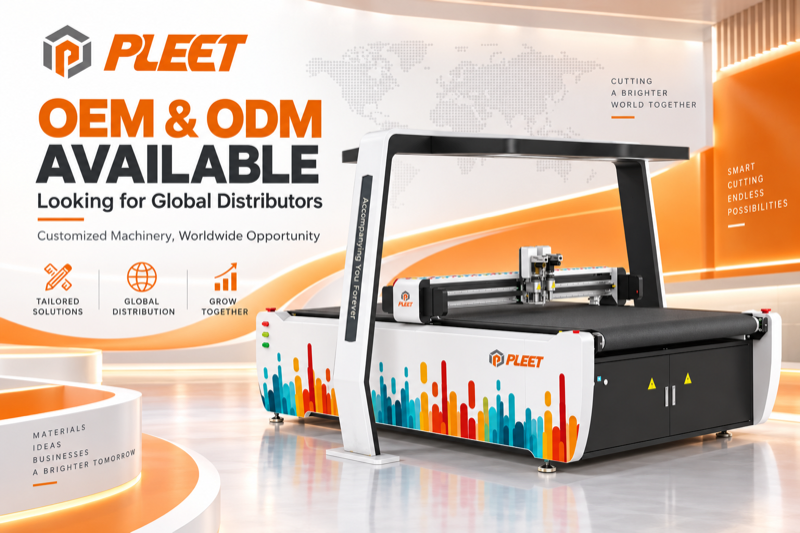
Shandong PLEET Intelligent Technology Group Co., Ltd. develops and manufactures CNC digital cutting equipment for flexible materials.
Its configurable cutting systems offer capabilities including:
Oscillating knife cutting
Creasing tools
Automatic nesting
Vacuum material holding
Optional CCD vision positioning
Customized working areas
Depending on the configuration, PLEET equipment can be evaluated for corrugated cardboard, folding carton board, protective foam inserts, and other compatible packaging materials.
PLEET also provides material testing, equipment configuration guidance, installation, operator training, and 7×24 remote technical support.
Specific cutting thickness, creasing performance, and production capacity should be verified through actual material trials.
Yes. Suitable CNC knife cutting machines can process many corrugated cardboard grades using appropriate blades and cutting parameters.
Yes. Digital cutting allows manufacturers to produce packaging prototypes directly from CAD files without dedicated cutting dies.
Yes. Multifunctional flatbed cutters equipped with suitable cutting and creasing tools can perform both operations.
It can support industrial production, particularly customized and mixed orders. Traditional die cutting may be more economical for very high volumes of identical packaging.
A CNC cutting machine for cardboard and packaging materials offers manufacturers a flexible solution for prototypes, customized boxes, protective inserts, and small-batch production.
Its main advantages include die-free cutting, rapid design changes, automatic nesting, and integrated cutting and creasing.
For packaging manufacturers seeking reliable digital cutting equipment, PLEET provides configurable CNC solutions supported by material testing and technical services.
Choosing the right machine starts with evaluating actual packaging materials, cutting quality, creasing performance, and production requirements—not simply comparing advertised machine speeds.