
400-867-1999
Furniture manufacturers are facing increasing demand for customized sofas, upholstered chairs, and personalized interior products. Frequent design changes, rising labor costs, and expensive upholstery materials make traditional manual cutting increasingly challenging.
An automatic cutting machine for furniture fabric production offers a practical solution by combining CNC cutting technology, intelligent nesting, vacuum holding, and automatic material feeding.
From woven upholstery fabrics to velvet, synthetic leather, and foam-backed textiles, digital cutting helps furniture manufacturers improve material utilization, maintain cutting consistency, and respond efficiently to customized orders.
An automatic furniture fabric cutting machine uses computer-controlled cutting tools to process upholstery materials according to digital patterns.
Depending on the material, the equipment may use an oscillating knife, rotary knife, or other suitable cutting tools.
The typical production workflow is:
CAD Pattern → Intelligent Nesting → Automatic Feeding → Vacuum Holding → CNC Cutting → Component Collection
Approved cutting patterns can be stored and reused for different furniture models, reducing repetitive preparation and manual measuring.
Furniture manufacturing involves various flexible materials with different cutting characteristics.
| Material | Furniture Application | Cutting Consideration |
|---|---|---|
| Woven upholstery fabric | Sofas and chairs | Grain direction and fraying |
| Velvet | Premium furniture | Pile orientation |
| Linen fabric | Decorative upholstery | Fiber movement |
| Knitted fabric | Stretch upholstery | Elastic deformation |
| PU synthetic leather | Sofas and recliners | Coating integrity |
| Genuine leather | Luxury furniture | Natural defects |
| Microfiber leather | Upholstered furniture | Backing density |
| Foam-backed fabric | Cushions and seat coverings | Compression |
| Nonwoven fabric | Furniture lining | Material stability |
Different materials require suitable blades, cutting parameters, and holding methods.
Intelligent nesting software arranges furniture components within the available fabric width, reducing unnecessary offcuts.
For expensive upholstery fabrics, even a small improvement in material utilization can generate meaningful savings over time.
Automatic cutting reduces repetitive measuring, marking, template positioning, and manual cutting.
Compatible conveyor feeding systems can further reduce material-handling work.
CNC-controlled cutting paths help maintain repeatable component dimensions, reducing potential sewing and assembly problems.
Manufacturers can switch between sofa models, chair designs, and customized dimensions by updating digital cutting files.
Dedicated cutting dies are generally unnecessary for ordinary pattern changes.
Digital cutting is particularly suitable for furniture factories handling diverse customer orders rather than continuously producing identical products.
Furniture upholstery requires more than dimensional accuracy. Different fabric directions can create noticeable visual differences after assembly.
For example, velvet panels cut in opposite pile directions may appear to have different colors under the same lighting.
Intelligent nesting should respect:
Fabric grain direction
Velvet pile orientation
Printed-pattern alignment
Stretch direction
Stripe and plaid matching requirements
For patterned fabrics, suitable software and positioning methods must support the required matching strategy.
A nesting layout that saves fabric but creates visible inconsistencies in the finished sofa is not an efficient layout.
Most upholstery fabrics and synthetic leather materials are supplied in rolls.
Automatic conveyor feeding allows compatible materials to advance through the cutting area with reduced manual repositioning.
Potential benefits include shorter handling times, reduced physical workload, and improved production continuity.
However, excessive feeding tension may stretch the fabric and affect finished dimensions.
Manufacturers should evaluate feeding alignment, tension control, material flatness, and vacuum holding performance during equipment trials.
Irregular genuine leather hides generally require individual positioning and inspection rather than conventional roll feeding.
| Factor | Automatic CNC Cutting | Manual Cutting |
|---|---|---|
| Pattern preparation | Digital files | Physical templates |
| Material utilization | Intelligent nesting | Manual layout |
| Cutting consistency | Repeatable when validated | Operator-dependent |
| Labor requirements | Reduced repetitive work | More manual operations |
| Design changes | Digital updates | Template preparation |
| Customized production | Highly flexible | Labor-intensive |
| Initial investment | Higher | Lower |
Automatic cutting becomes particularly attractive when furniture manufacturers process multiple designs, expensive materials, and frequent customized orders.
For standardized high-volume production, specialized multilayer cutting systems may also deserve consideration.
Before purchasing equipment, furniture manufacturers should evaluate:
Material compatibility: Test actual upholstery fabrics and leather.
Working area: Accommodate large sofa and furniture components.
Cutting tools: Match blades to different textile structures.
Intelligent nesting: Verify directional restrictions and material utilization.
Automatic feeding: Check roll alignment and tension control.
Cutting accuracy: Measure finished components under realistic conditions.
Production capacity: Evaluate acceptable output per shift.
Technical support: Confirm installation, training, maintenance, and spare-parts availability.
Cutting samples should also be tested through actual sewing and furniture assembly to verify their suitability.
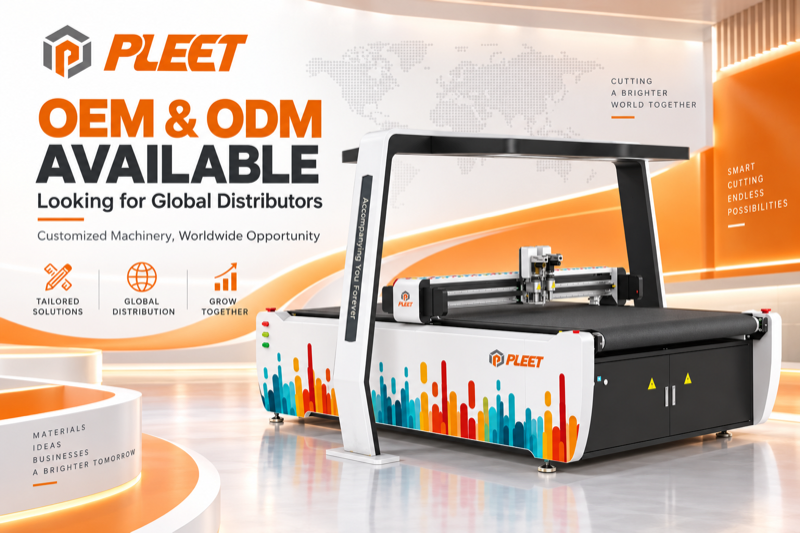
Shandong PLEET Intelligent Technology Group Co., Ltd. develops and manufactures CNC digital cutting equipment for flexible materials.
Its configurable furniture fabric cutting solutions include:
CNC oscillating knife cutting
Intelligent automatic nesting
Vacuum material holding
Automatic conveyor feeding
Optional CCD vision positioning
Customized working areas
Depending on equipment configuration, PLEET machines can process suitable upholstery fabrics, synthetic leather, genuine leather, and foam-backed textiles.
PLEET also provides material testing, equipment configuration guidance, installation, operator training, and 7×24 remote technical support.
Can an automatic cutting machine cut sofa fabric?
Yes. Suitable CNC cutting machines can process various upholstery fabrics used in sofas, chairs, and other furniture products.
Can one machine cut both fabric and leather?
A configurable digital cutter can process compatible fabrics and leather using suitable cutting tools and parameters.
Does automatic nesting reduce furniture fabric waste?
Yes. Intelligent nesting can improve material utilization while respecting fabric direction and production restrictions.
Is automatic cutting suitable for customized furniture?
Yes. Digital pattern management supports frequent design changes and small-batch production without dedicated dies.
Can automatic cutting improve sewing efficiency?
Consistent component dimensions and accurate alignment notches can reduce cutting-related sewing difficulties.
Key takeaway: An automatic cutting machine for furniture fabric production creates value by improving material utilization, reducing repetitive manual operations, and maintaining consistent component quality. Its effectiveness depends on matching cutting tools, feeding systems, and nesting software to actual upholstery materials.
For furniture manufacturers seeking greater production flexibility and lower processing costs, PLEET offers configurable CNC digital cutting solutions. Material-specific cutting trials can help determine the appropriate equipment configuration and evaluate potential improvements before investment.